Physical Address
Bangladesh
Physical Address
Bangladesh


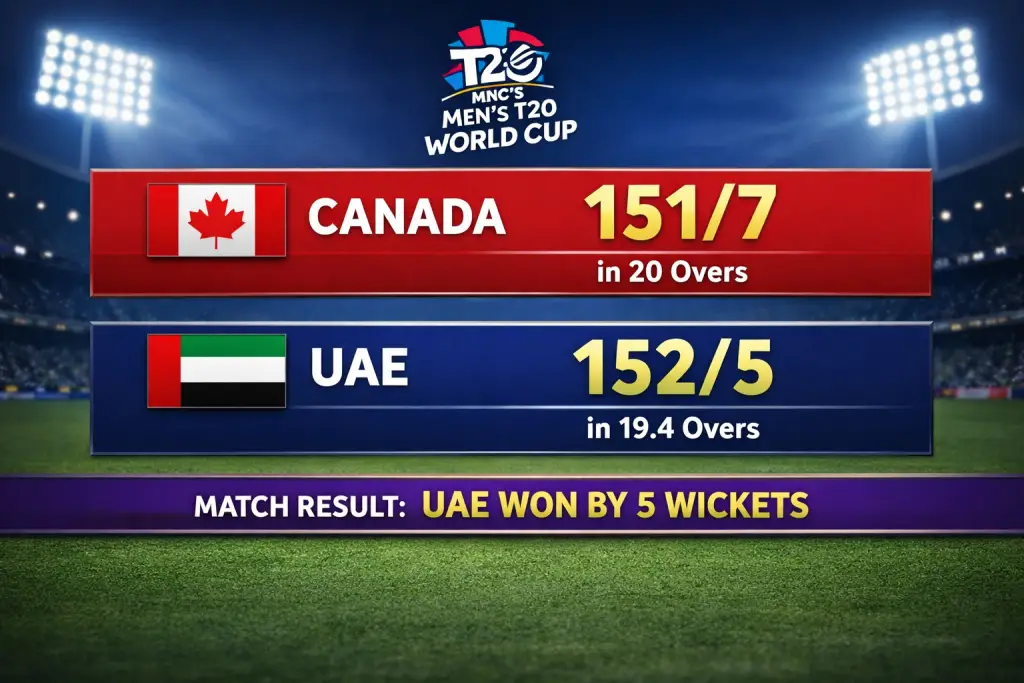
UAE Defeat Canada in ICC Men’s T20 World Cup Thriller, Chase Down 151 with Two Balls to Spare
In a gripping contest at the ICC Men’s T20 World Cup, the United Arab Emirates produced a composed and mature performance to defeat Canada by five wickets, successfully chasing down a target of 151 with just two balls remaining. The match highlighted the fine margins of T20 cricket and once again proved how rapidly associate nations are closing the gap at the highest level.
From disciplined bowling to a calm and calculated run chase, the UAE displayed tactical awareness, patience, and confidence—key ingredients that ultimately sealed a memorable victory.
Match Context: A Crucial Group-Stage Battle
With the group stage entering a decisive phase, the encounter carried significant importance for both teams. Canada and the UAE knew that a win could greatly influence their tournament momentum. Canada aimed to convert competitive performances into points, while the UAE sought to establish themselves as a serious contender capable of handling pressure on the world stage.
The pitch offered balanced conditions. Batters were rewarded for timing and placement, while bowlers who varied their pace and length found success, particularly during the middle overs. A total of around 150 was competitive but far from unachievable.
Canada’s Innings: Competitive but Incomplete
After winning the toss, Canada chose to bat first with the intention of building a strong foundation and accelerating towards the end. While the plan worked in patches, inconsistency at crucial moments prevented them from posting a more imposing total.
Harsh Thaker Leads the Way
Canada’s innings revolved around a steady knock from Harsh Thaker, who scored 51 runs off 41 balls. His innings was marked by responsibility rather than aggression, focusing on strike rotation and punishing loose deliveries. At a time when wickets were falling at the other end, Thaker ensured stability and kept the innings together.
Middle-Overs Slowdown
Despite a solid start, Canada struggled to maintain momentum during the middle overs. Tight bowling restricted easy singles, forcing batters into risky shots. As a result, partnerships failed to develop, and the scoring rate dipped at a crucial stage of the innings.
A Modest Finish
In the final overs, Canada attempted to accelerate but were kept in check by disciplined death bowling. Boundaries were limited, and the innings concluded at 151 runs—competitive, but slightly below what they might have hoped for.
UAE Bowling: Discipline Over Aggression
The UAE’s bowling effort was built on clarity and execution. Rather than relying solely on attacking deliveries, the bowlers focused on control, varying their pace and targeting consistent areas. This approach paid off as pressure forced Canada into mistakes, preventing a late surge.
The Chase: Early Wobbles, Calm Recovery
Chasing 151, the UAE faced early pressure as wickets fell within the powerplay. Canada’s bowlers sensed an opening, and for a brief period, the match hung in the balance. However, the UAE resisted panic, choosing to rebuild steadily instead of forcing the pace.
Aryansh Sharma’s Match-Winning Knock
The turning point of the match was a brilliant innings from Aryansh Sharma, who scored 74 runs and anchored the chase with maturity and composure.
Controlled Start, Perfect Finish
Sharma began cautiously, respecting good deliveries and focusing on placement. Against spin, his footwork was precise, while against pace he relied on timing rather than power. As the innings progressed, he took greater responsibility, ensuring the required run rate remained under control.
Smart Acceleration
What made Sharma’s innings special was his ability to accelerate at the right moments. He picked his scoring options carefully, finding boundaries without taking unnecessary risks. His knock ensured that the chase never drifted out of control.
Final Overs: Nerve and Composure
As the match entered its closing stages, tension grew. Canada attempted to apply pressure with attacking fields and variations, but the UAE batters remained calm. Singles were taken smartly, strike rotation was efficient, and mistakes were avoided.
Ultimately, the UAE reached the target with two balls remaining, completing a composed and well-managed chase.
Canada’s Bowling Effort: Promising but Inconsistent
Canada’s bowlers showed intent, especially early in the innings. However, they struggled to maintain consistent pressure throughout the chase. A few loose deliveries and missed opportunities allowed the UAE to regain control at key moments.
Tactical Breakdown: Why UAE Emerged Victorious
Several factors played a role in the UAE’s success:
Disciplined bowling that restricted Canada to a manageable total
A well-paced chase built around a reliable anchor
Smart game awareness in pressure situations
Strong mental composure during crucial moments
Canada, meanwhile, will reflect on missed chances and the need for stronger execution during middle and death overs.
What This Result Means
The victory gives the UAE a significant boost in confidence and strengthens their position in the group. It reinforces their growing reputation as a side capable of executing plans under pressure.
For Canada, the defeat serves as a reminder that competitive performances must be backed by consistency and sharp execution to convert opportunities into wins
This match was a clear demonstration of how competitive global T20 cricket has become. The UAE’s five-wicket victory was not just about talent, but about discipline, patience, and intelligent decision-making. As the tournament progresses, performances like this underline why the ICC Men’s T20 World Cup continues to deliver compelling, unpredictable cricket.